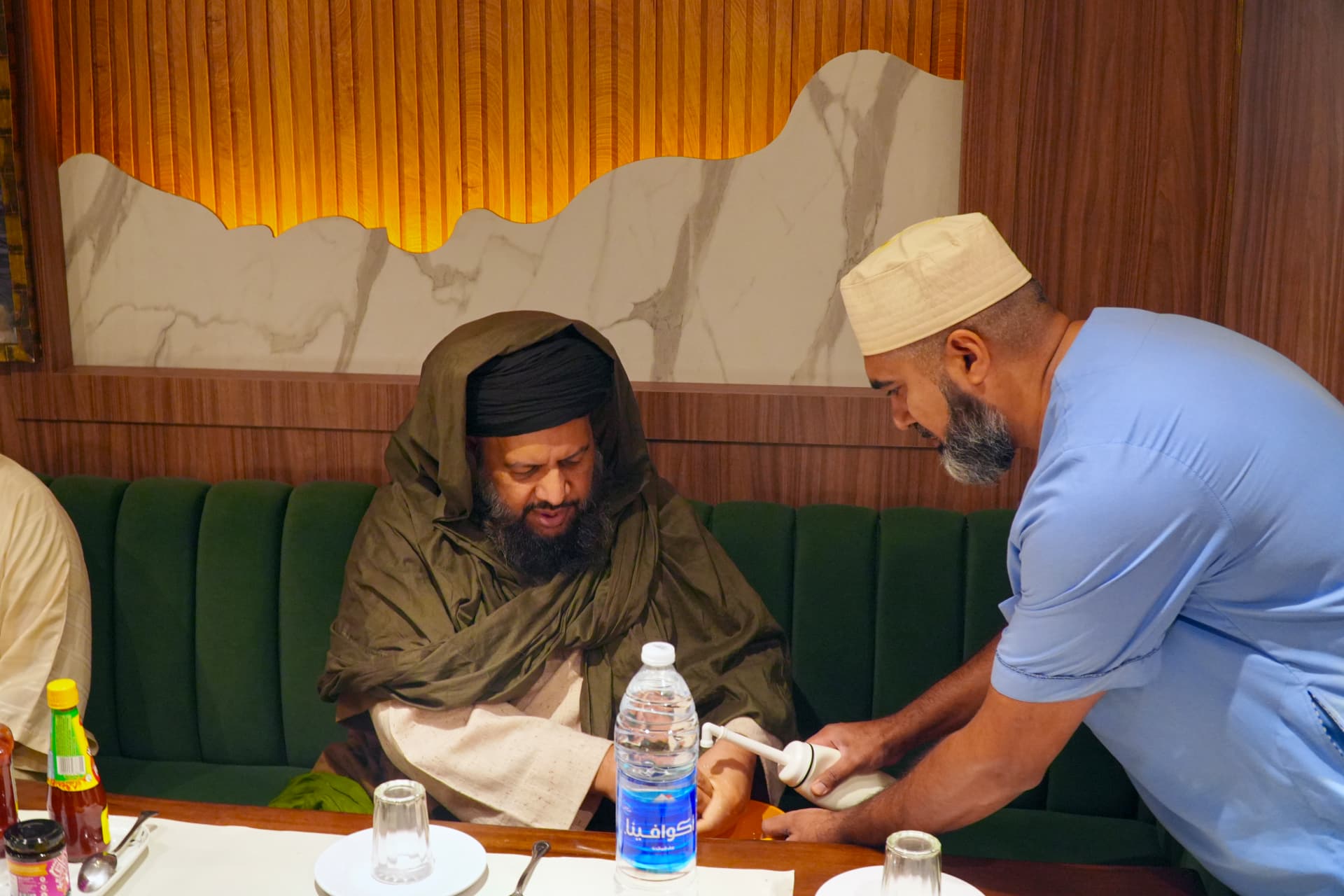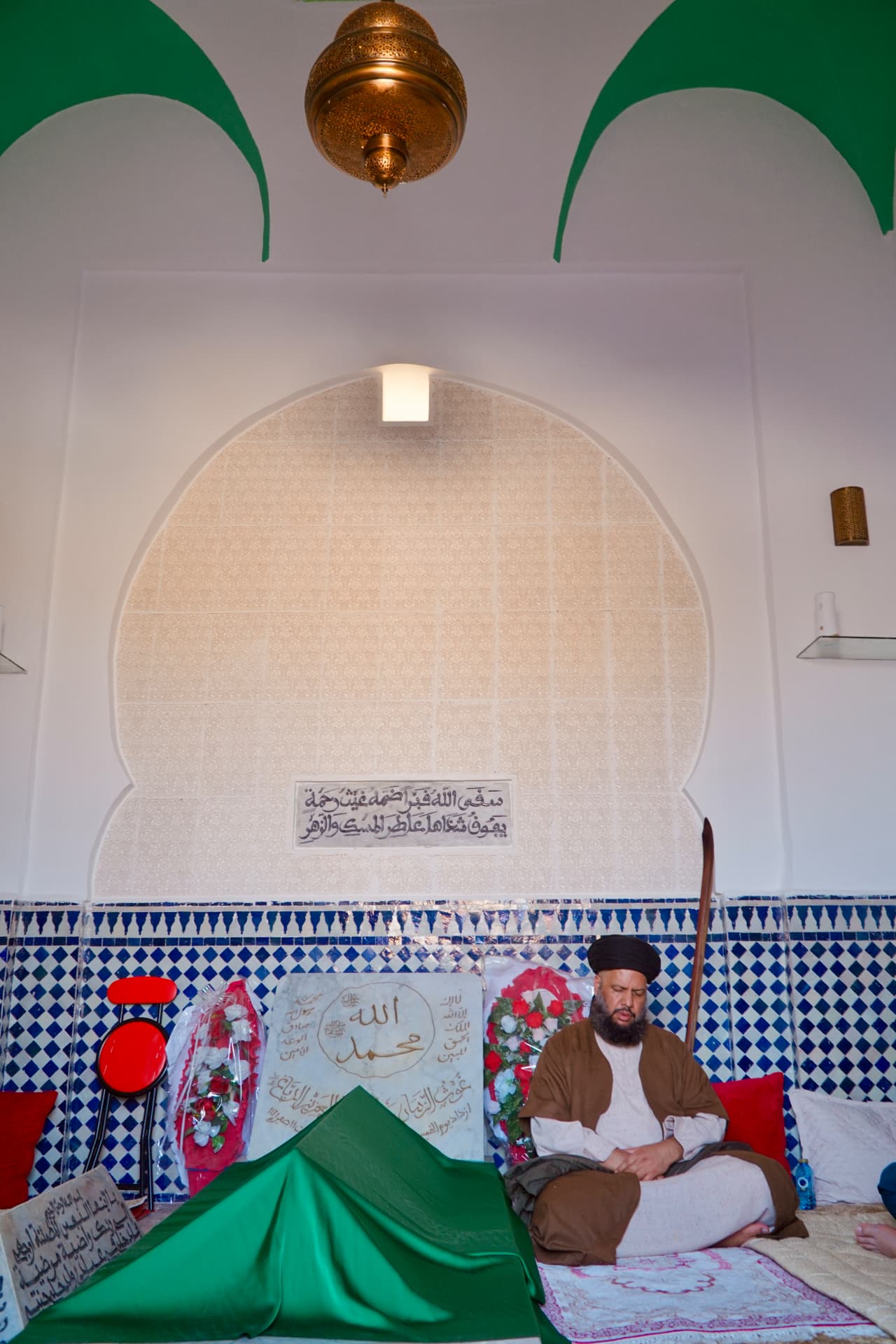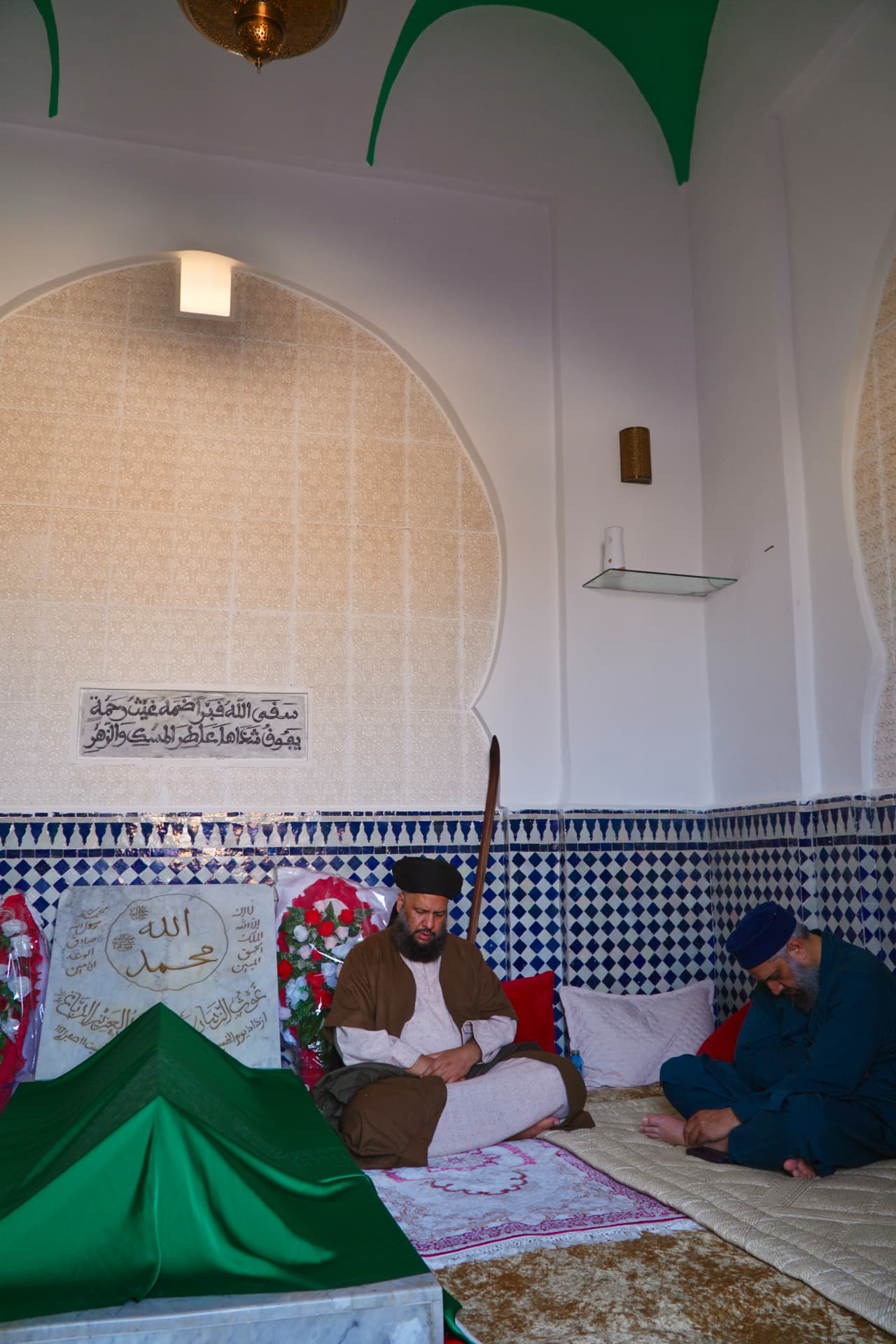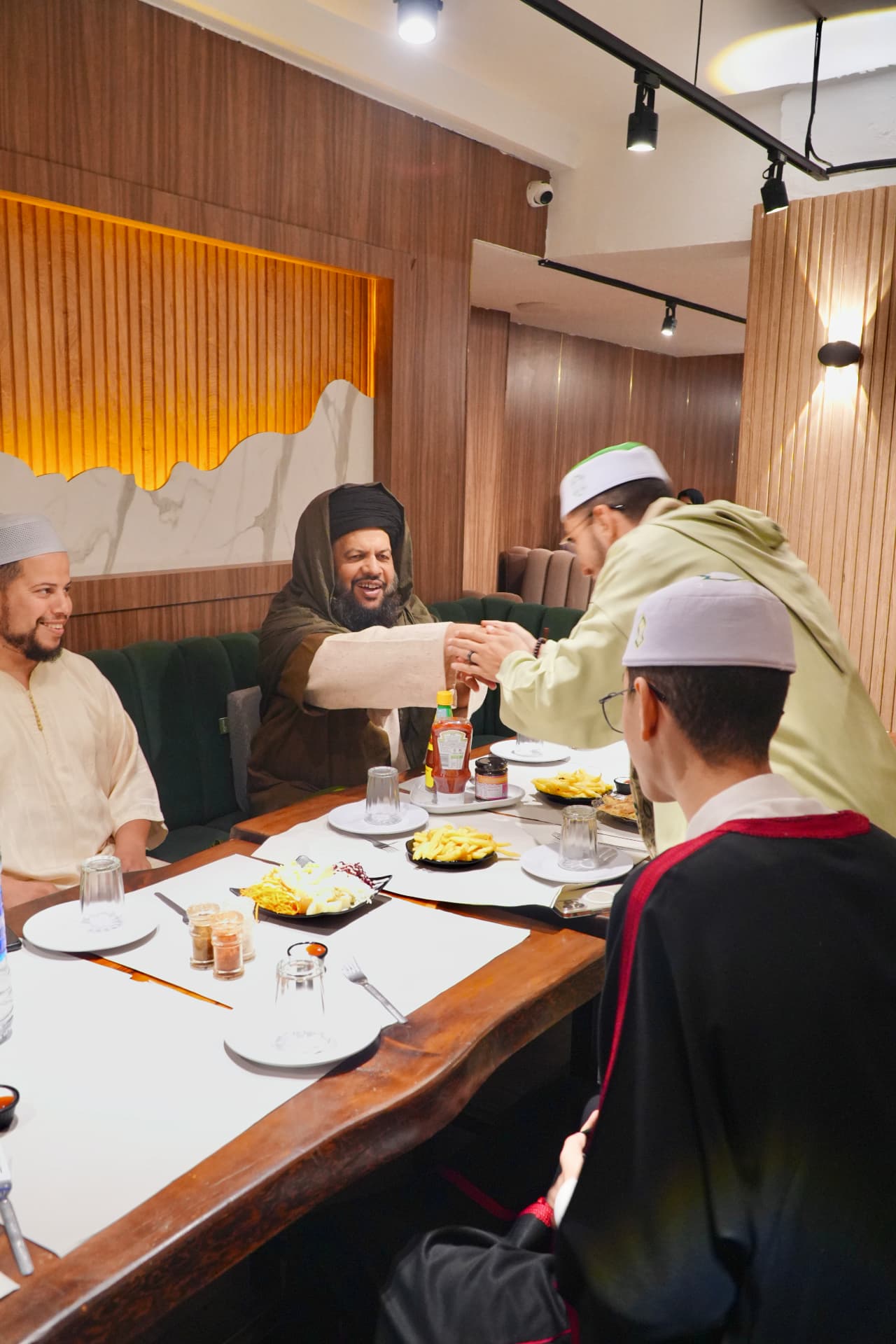
The journey's first collective dinner brought together brothers from Pakistan, Denmark, the USA and Saudi Arabia, joined by the blessed sons of Dr Idreesi Al Kubaidi. Over discussion and catching up, the gathering explored a single theme: from the outward practice of Salah to the reality of a life connected to Allah. Worship, the Shaykh taught, should not remain confined to rituals performed at particular times — its purpose is to transform our hearts, minds, character, decisions and entire way of life.
Gems from the gathering
- 1
Performing Salah versus establishing Salah — the Qur'an commands “Establish the prayer” (وَأَقِيمُوا الصَّلَاةَ). Salah should not remain on the prayer mat; it should shape how we think, speak, treat our families, conduct our business and behave when nobody is watching.
- 2
Four questions of spiritual self-assessment: What do we feel in the presence of Allah? How present is our heart in worship? How connected are we to Rasulullah ﷺ? And what obstacles prevent us from living a life genuinely connected to Allah?
- 3
The levels of Salawat upon Rasulullah ﷺ — from remembrance, to reflection upon his Sunnah, to internalisation of his teachings, to embodiment of his mercy, patience, humility and compassion in our own character.
- 4
Dhikr is more than the repetition of words. Like the servant who speaks little but diligently fulfils every duty, true remembrance is lived: it moves from the tongue to the mind, the heart, our actions and finally our entire existence.
- 5
Creation as a manifestation of Allah's attributes — “So that you may know” (لِتَعْلَمُوا). The Creator is recognised through creation, the All-Powerful through the power evident in the universe, the Provider through the sustenance of every living being.
- 6
Human beings are honoured above mountains, trees and rivers with intellect, will and moral responsibility — able to become a mazhar, a reflection of the qualities Allah loves: mercy, justice, generosity, forgiveness and patience.
Words to carry
"The objective is not simply to pray, but to become a person whose entire life reflects the values and guidance of Salah."
"A person may recite thousands of Salawat and sit in many gatherings of Dhikr, yet still struggle with anger, arrogance or dishonesty — so we must ask: is our worship transforming us?"
"If someone observed my life without hearing a single word I recite in Salah, Dhikr or Salawat, would they still see the influence of Allah and His Messenger ﷺ in my character, my decisions and my treatment of others?"