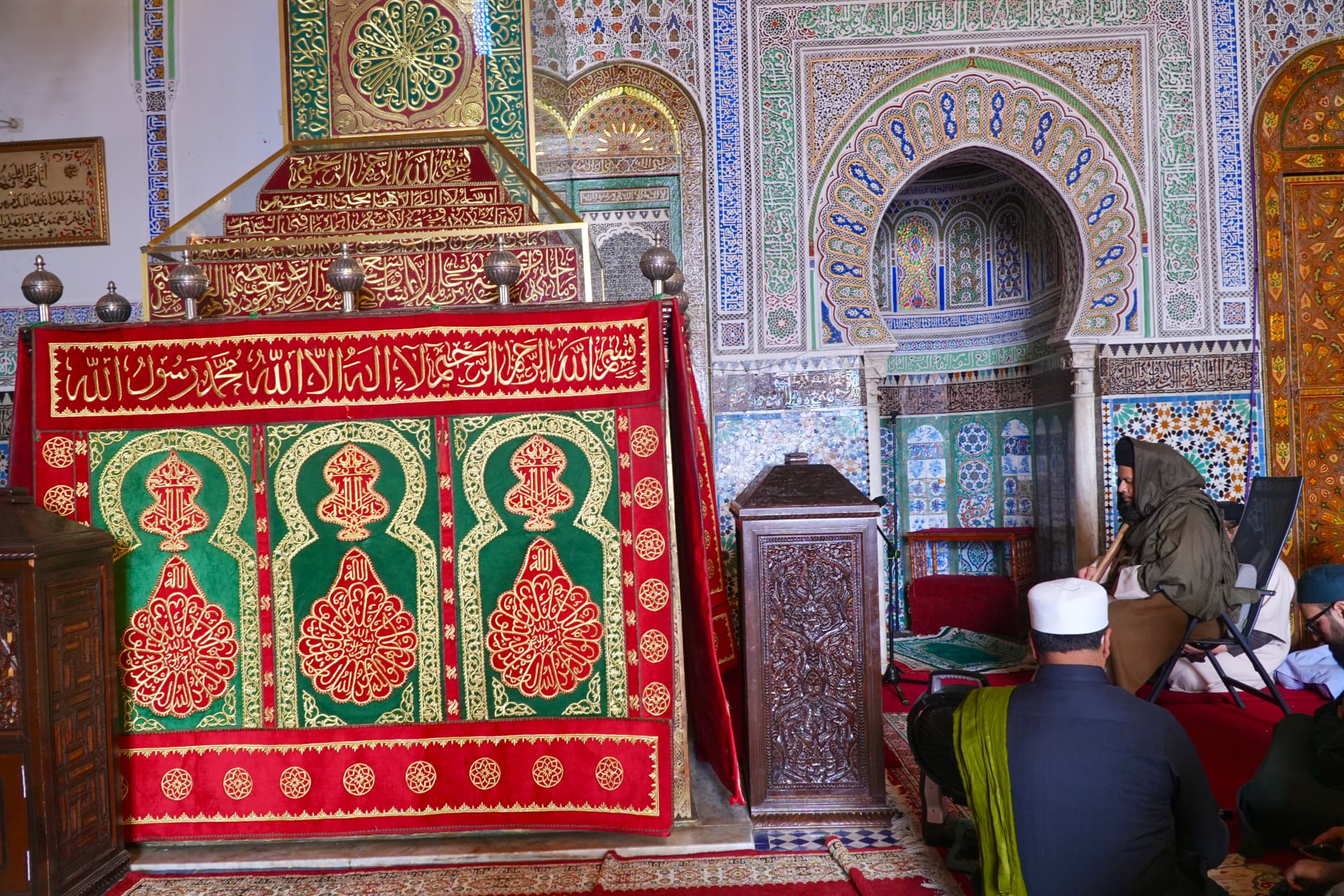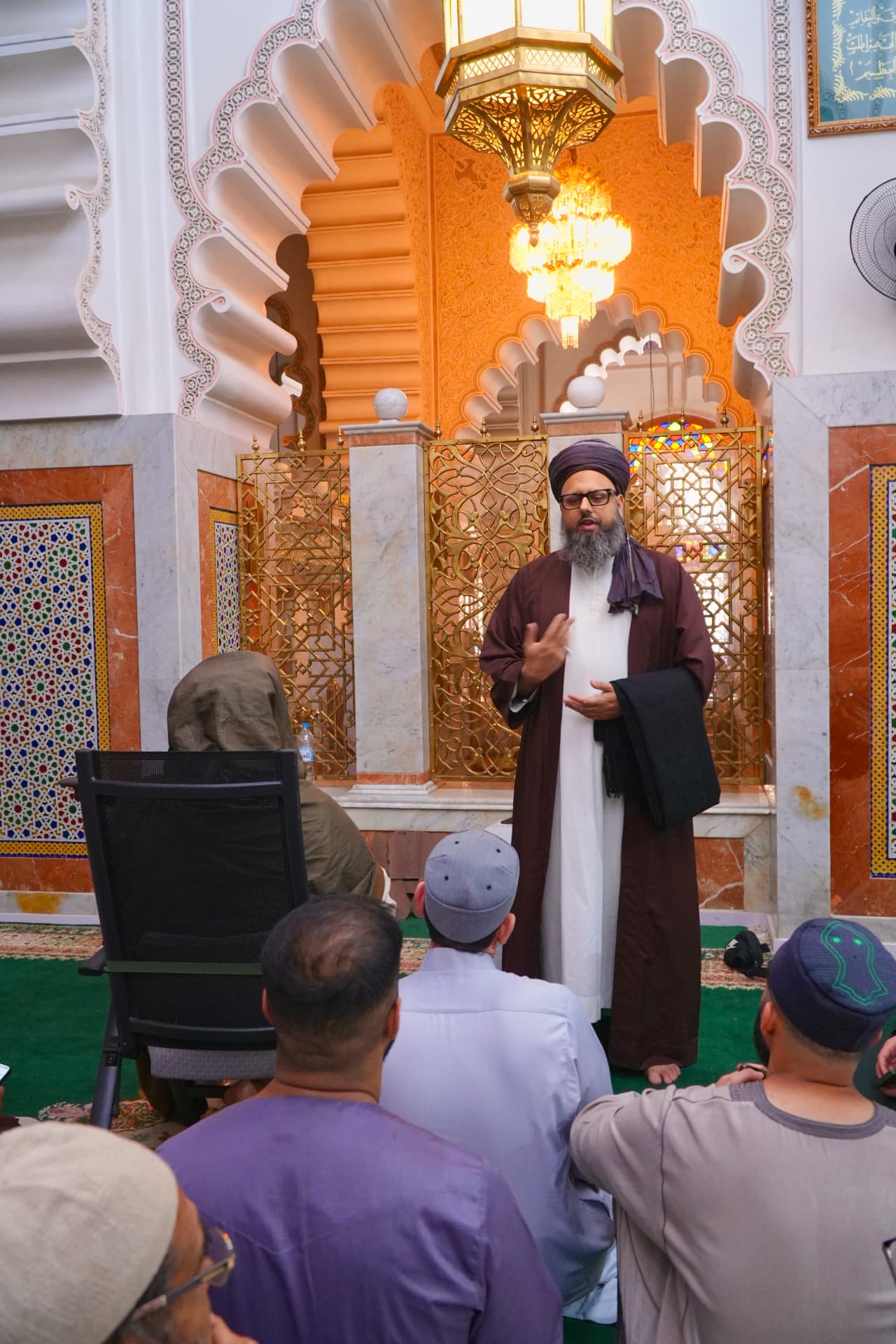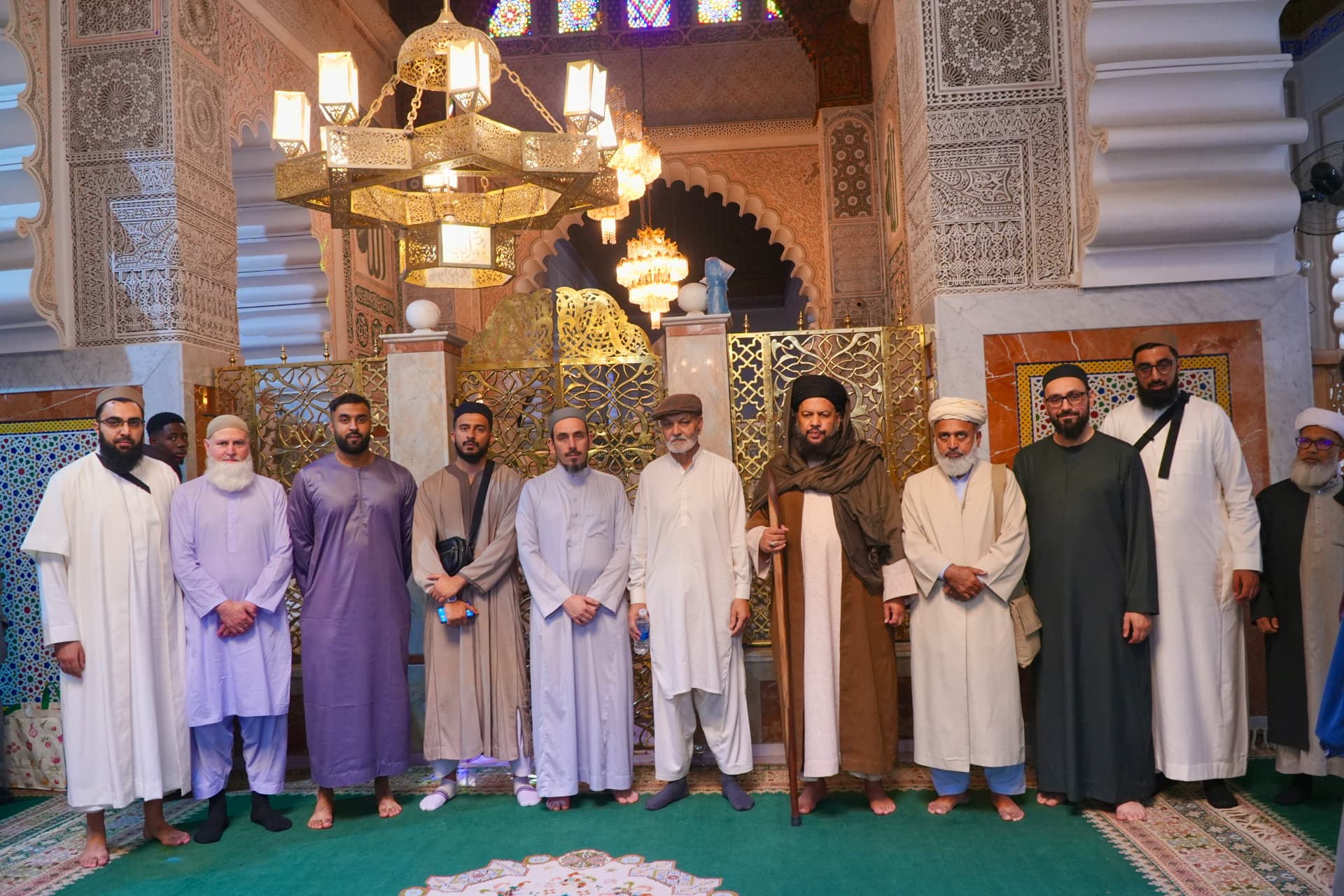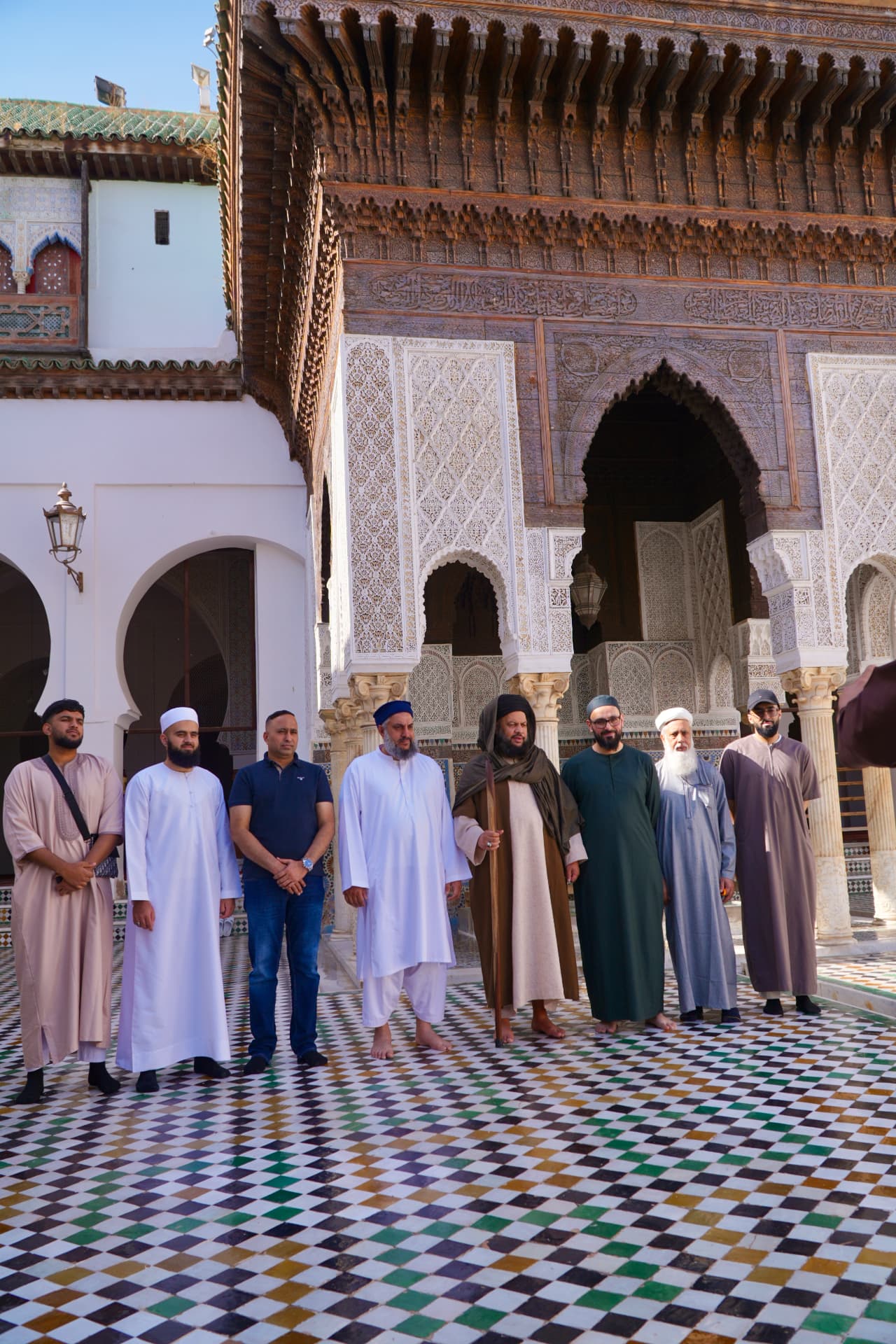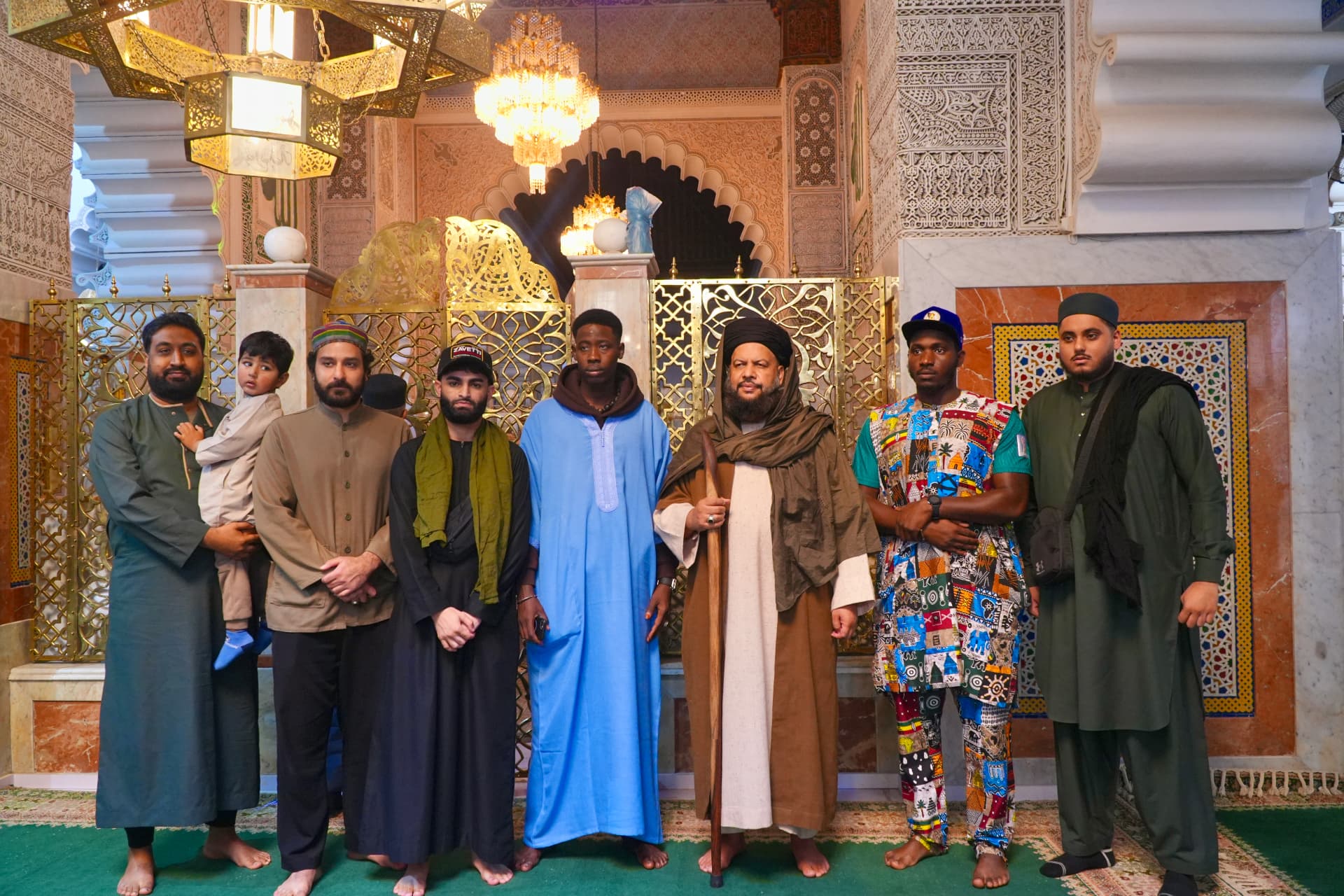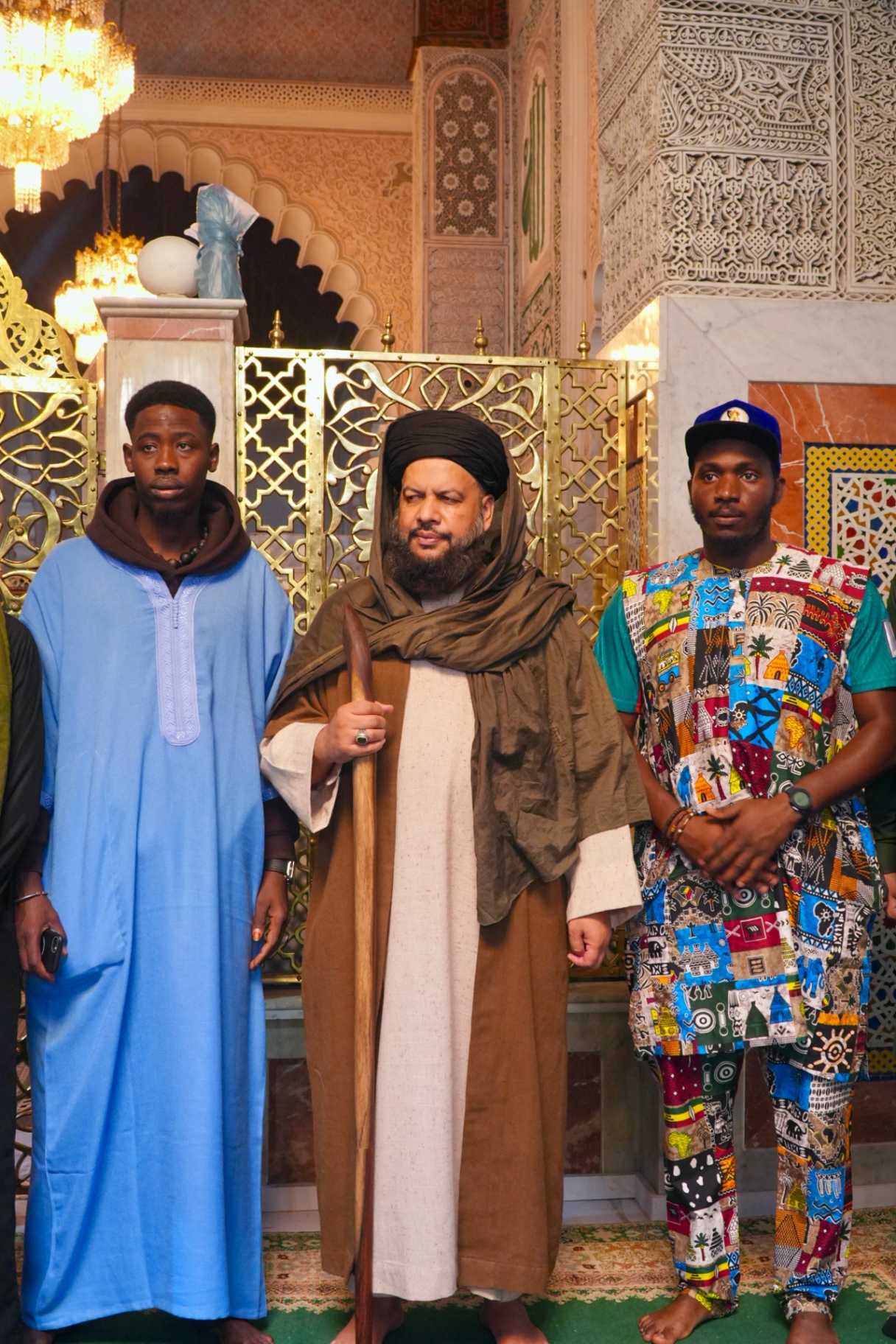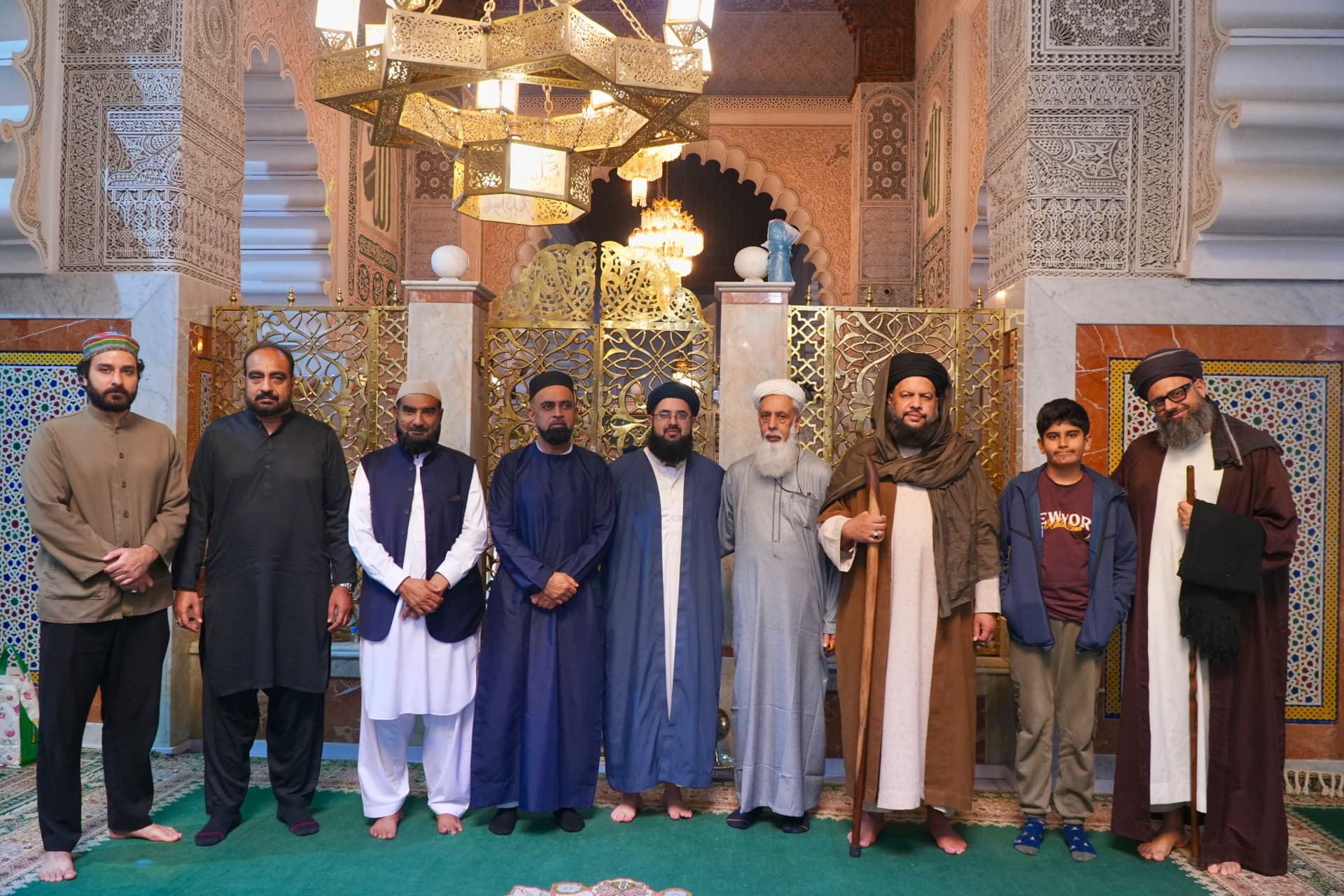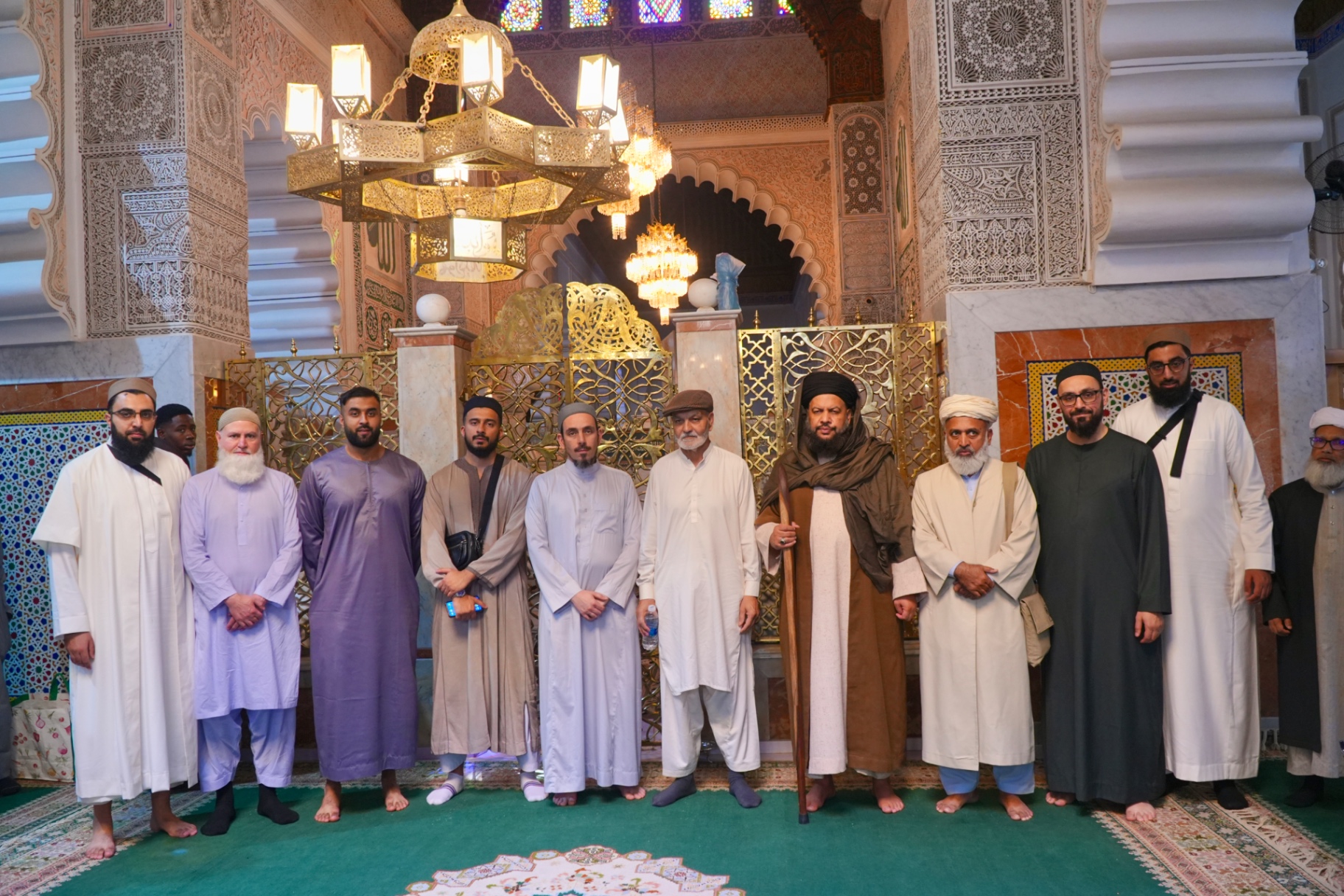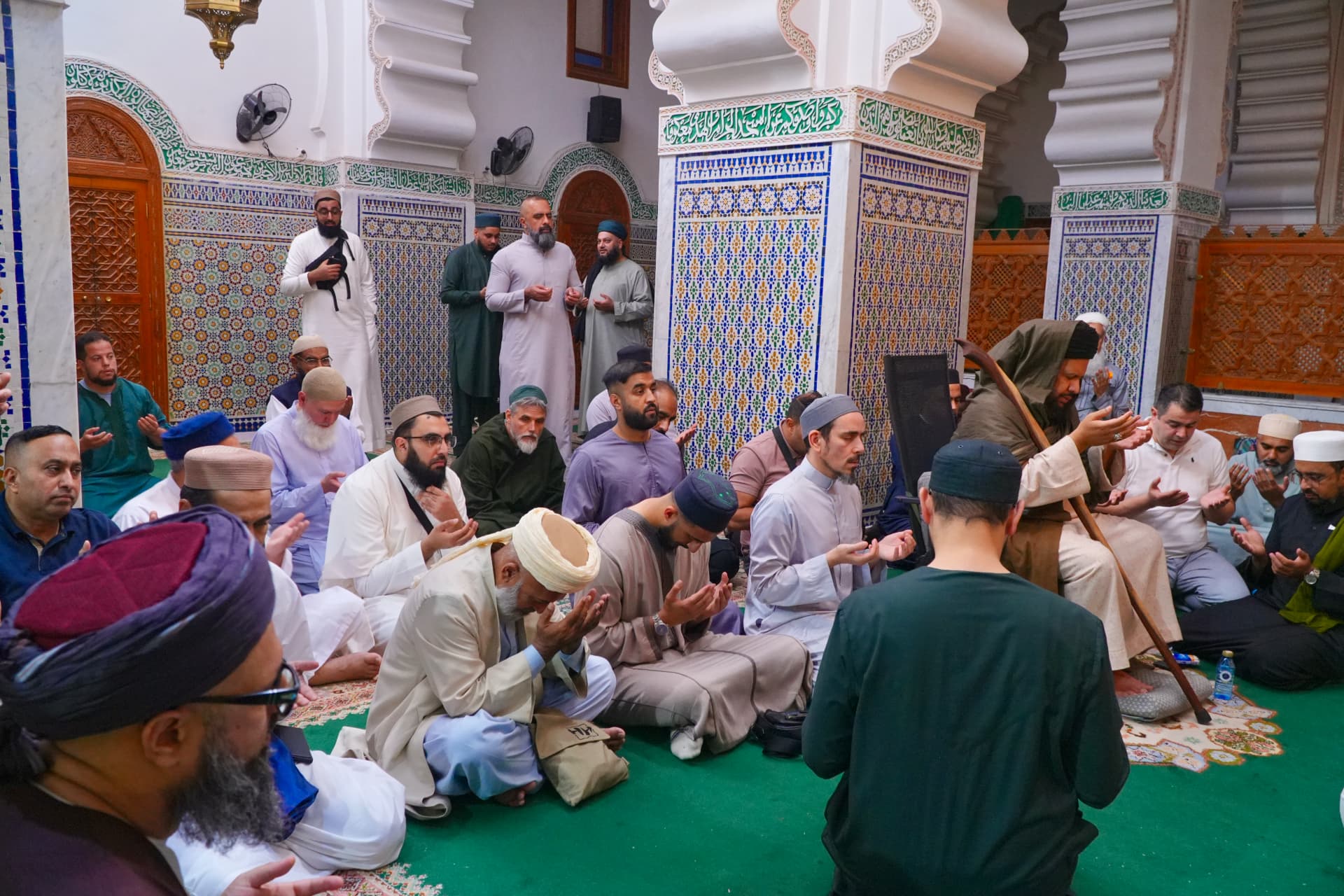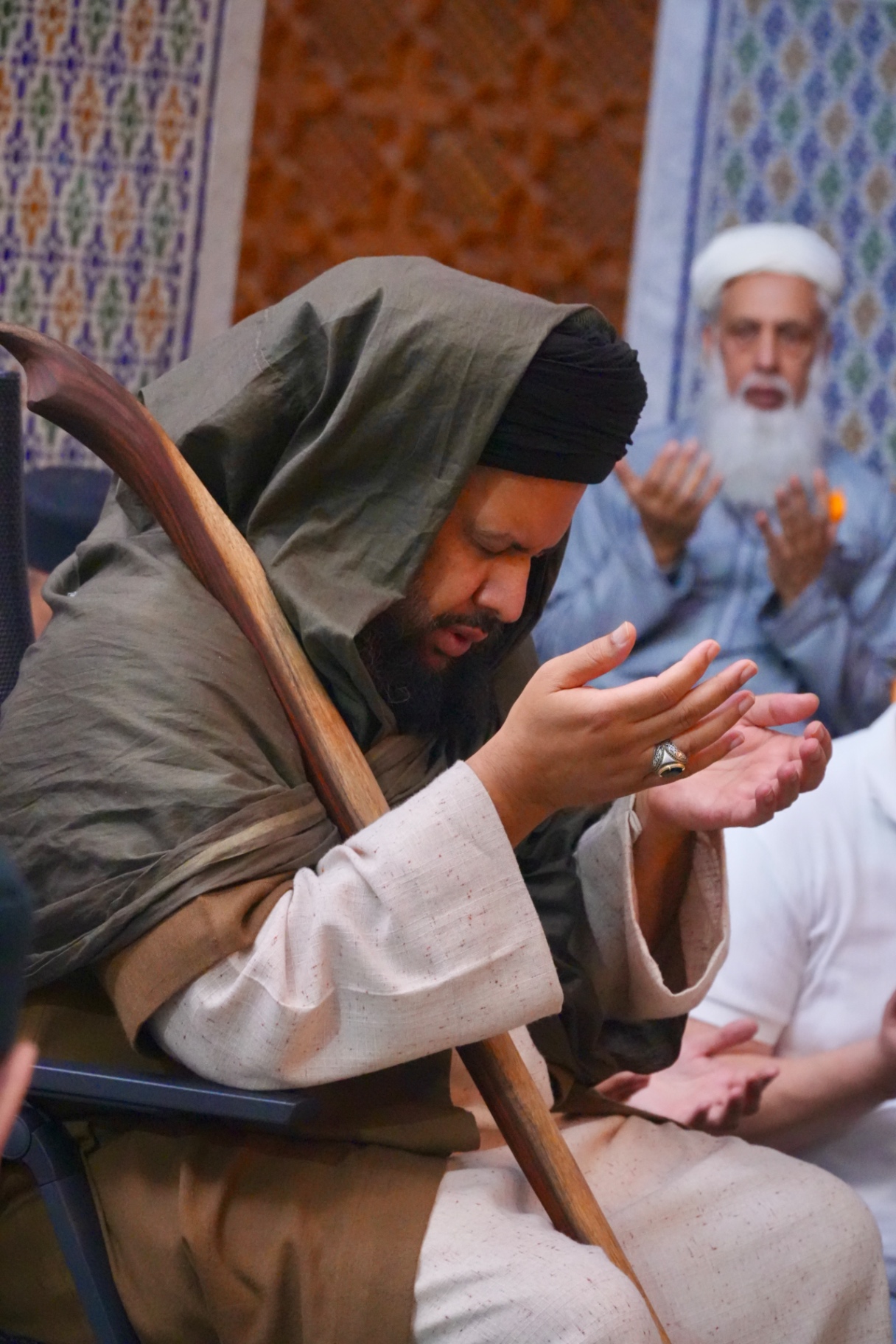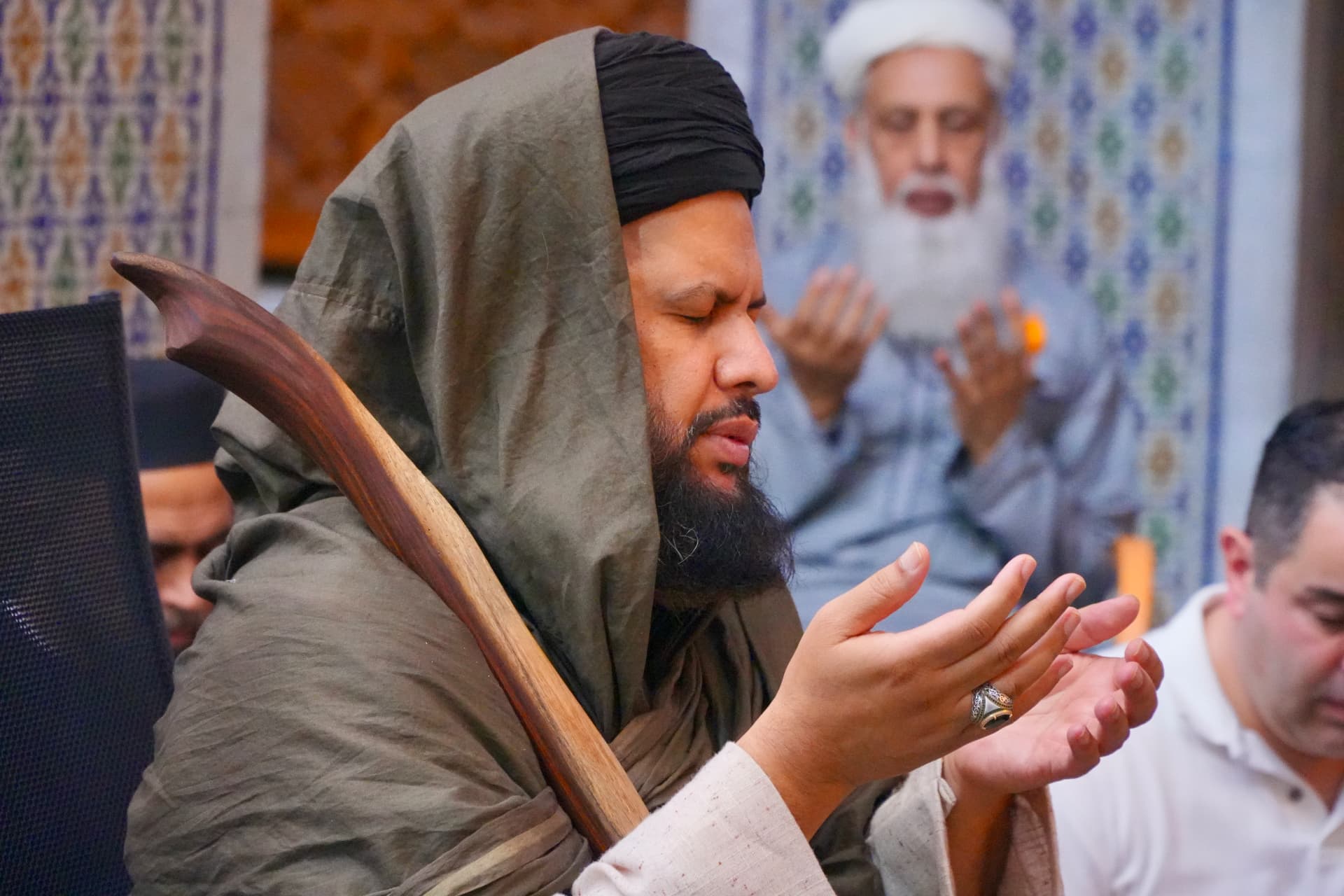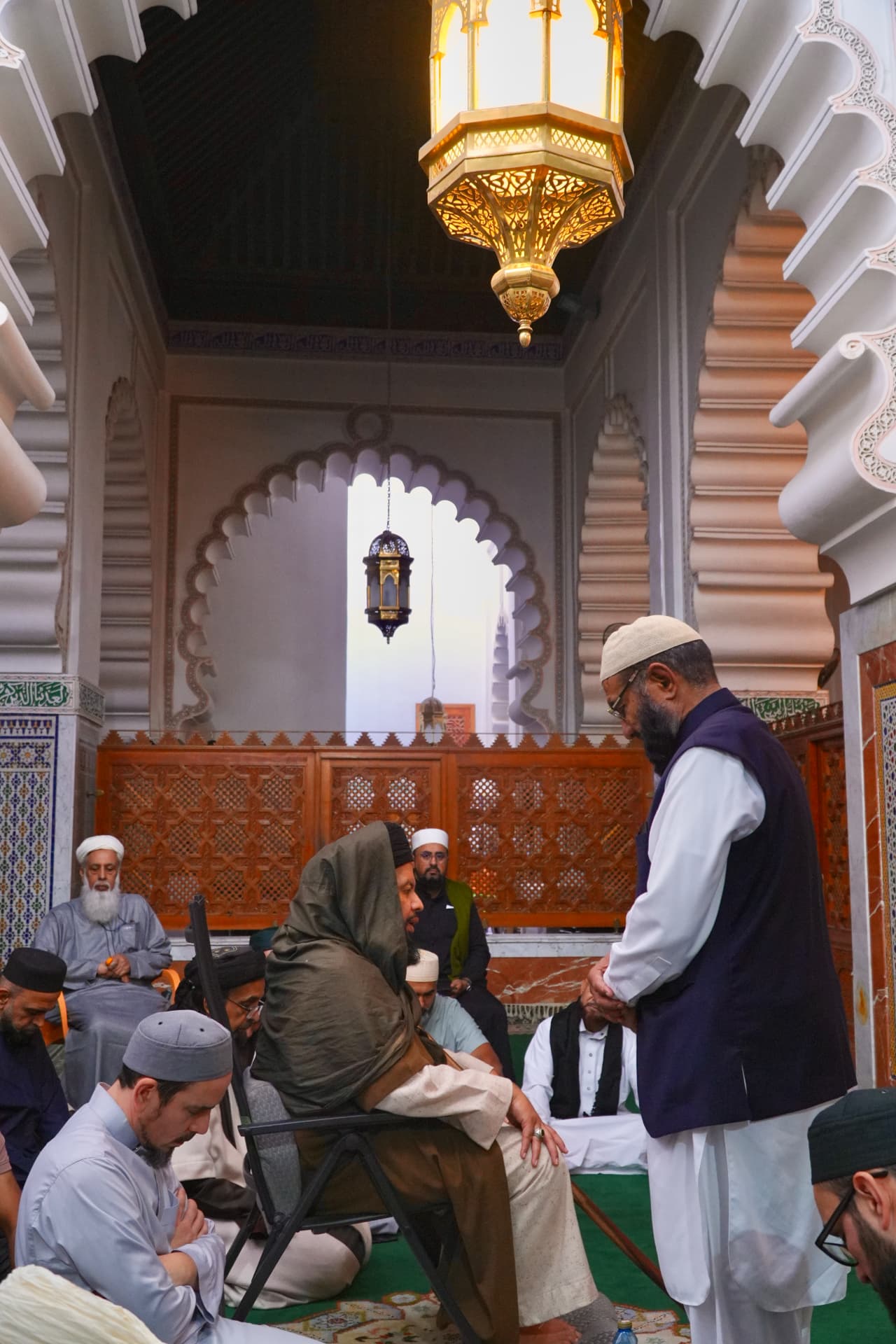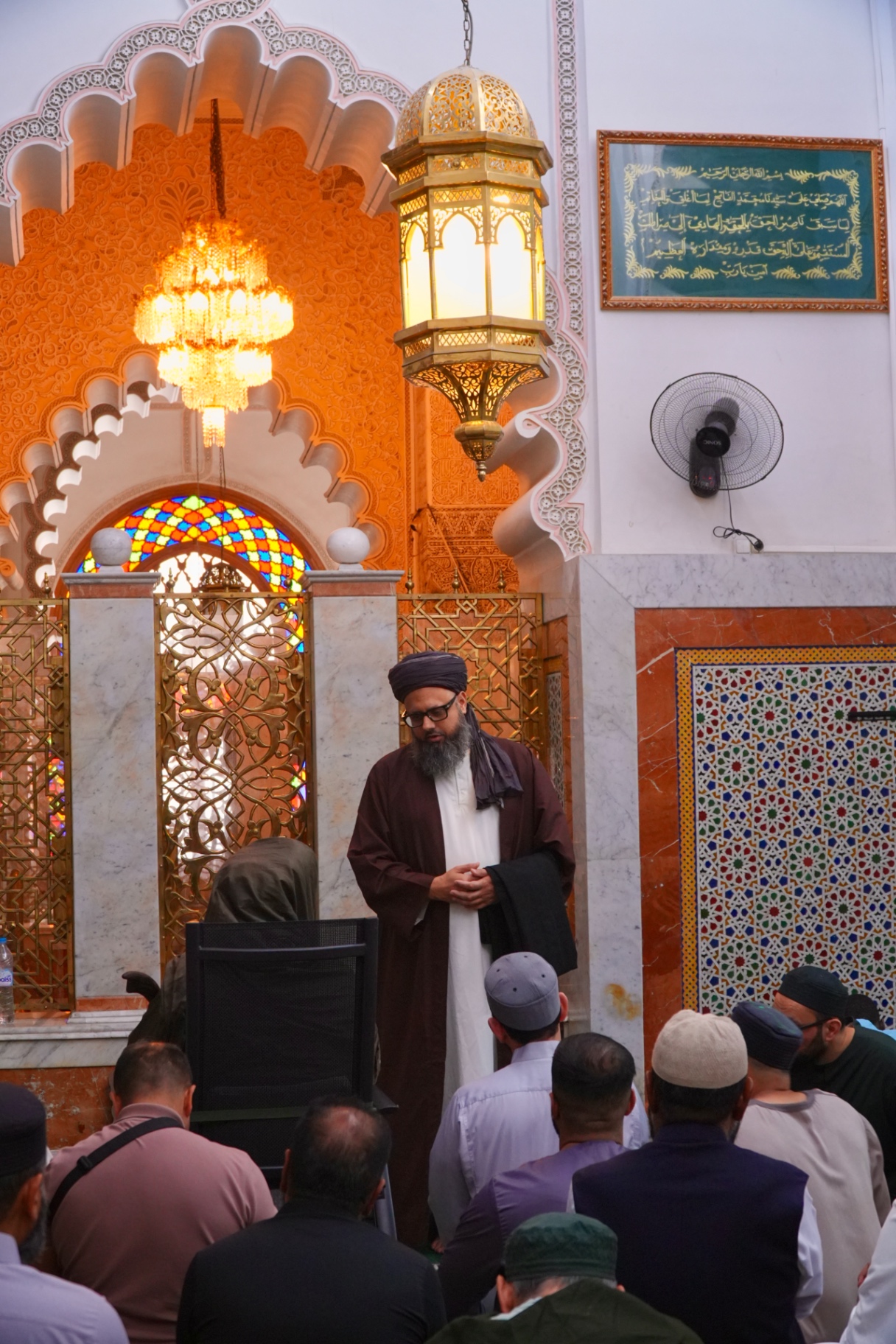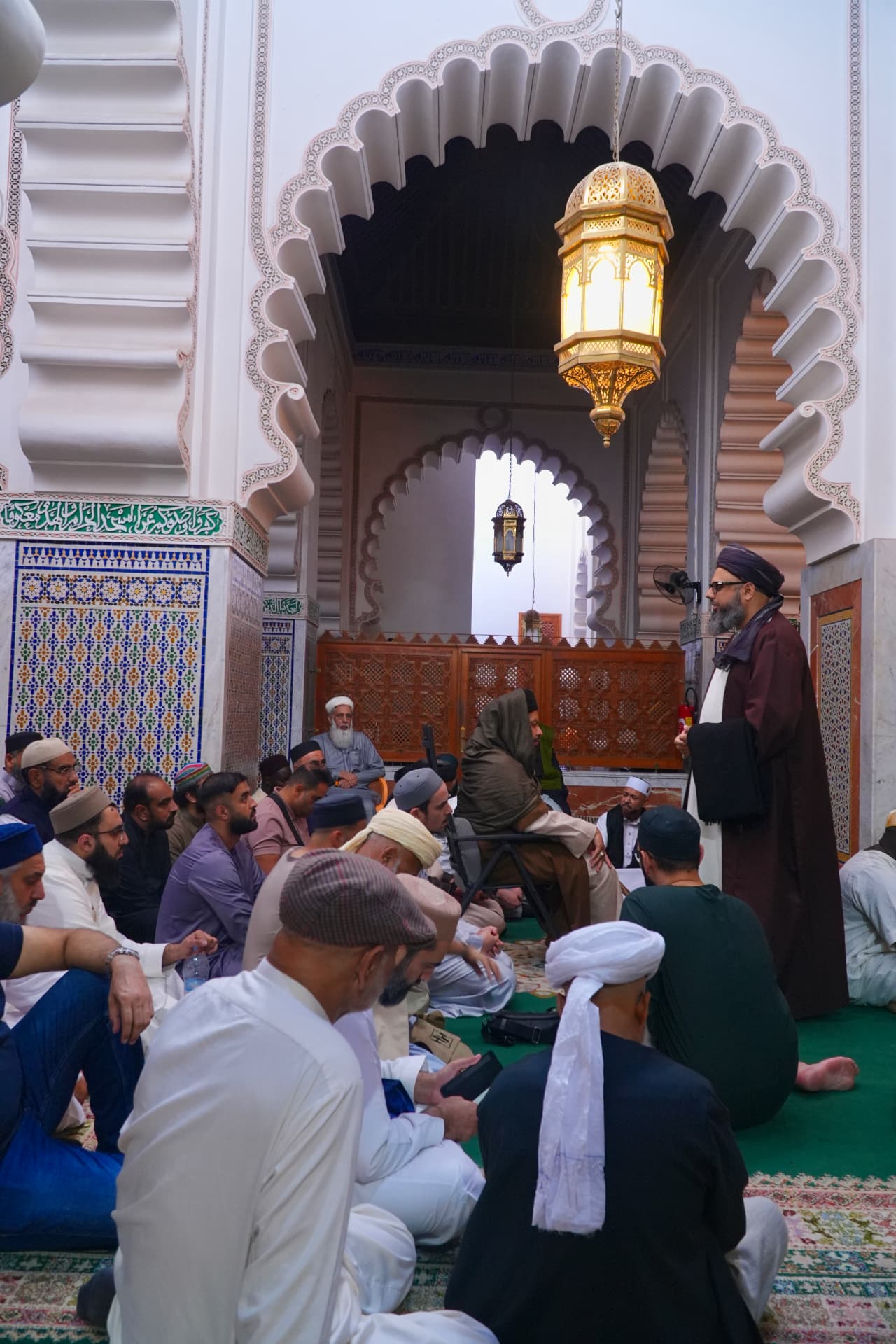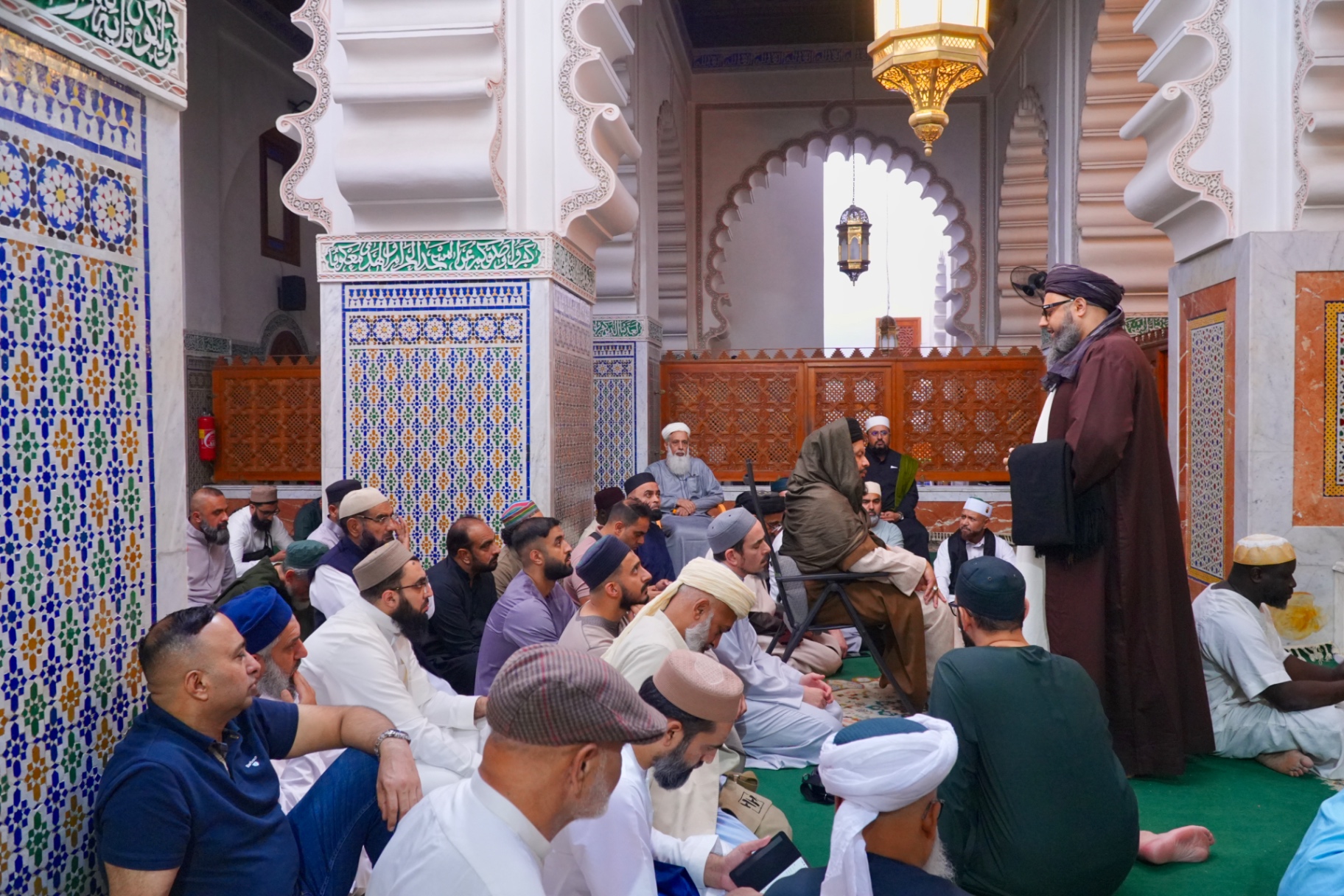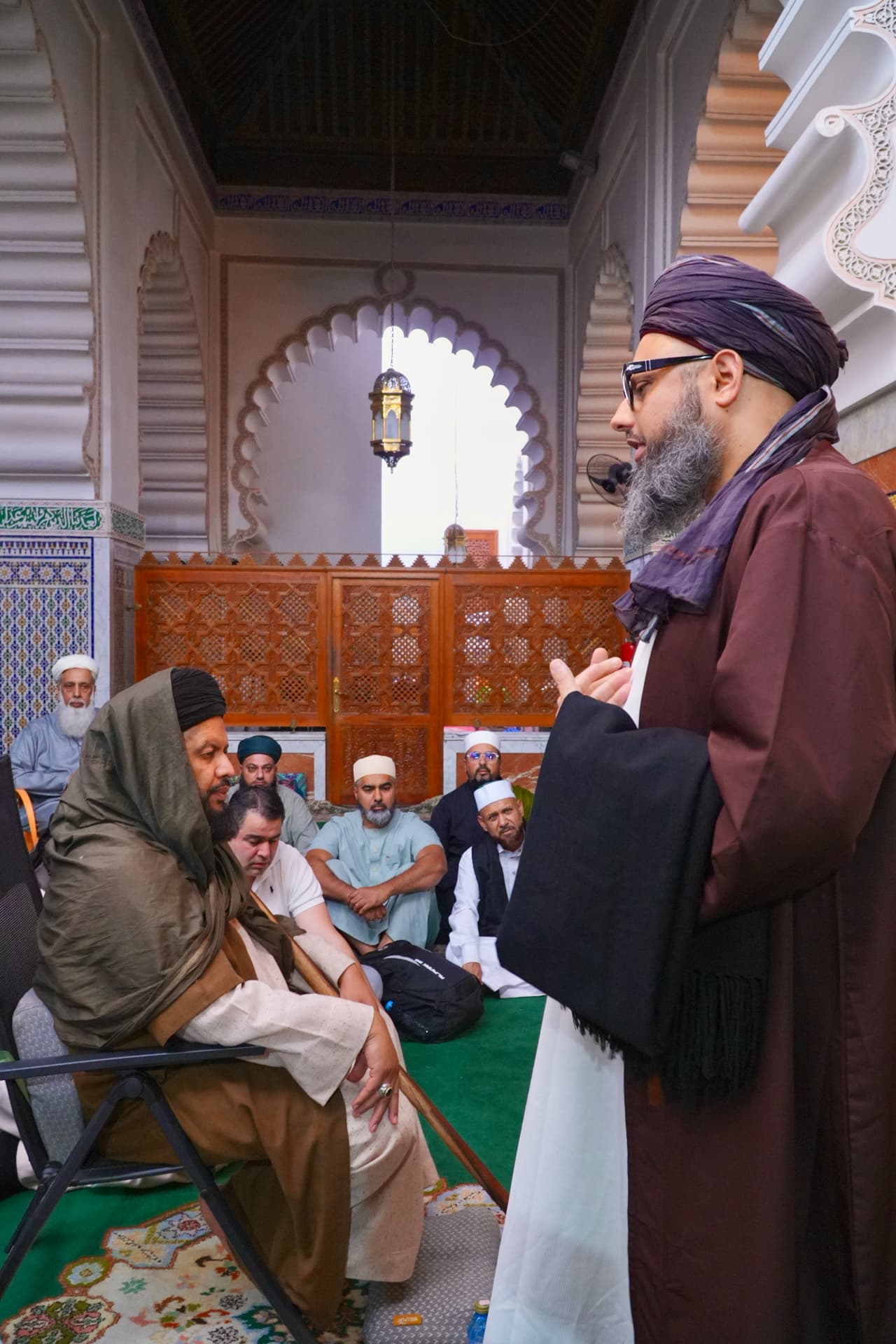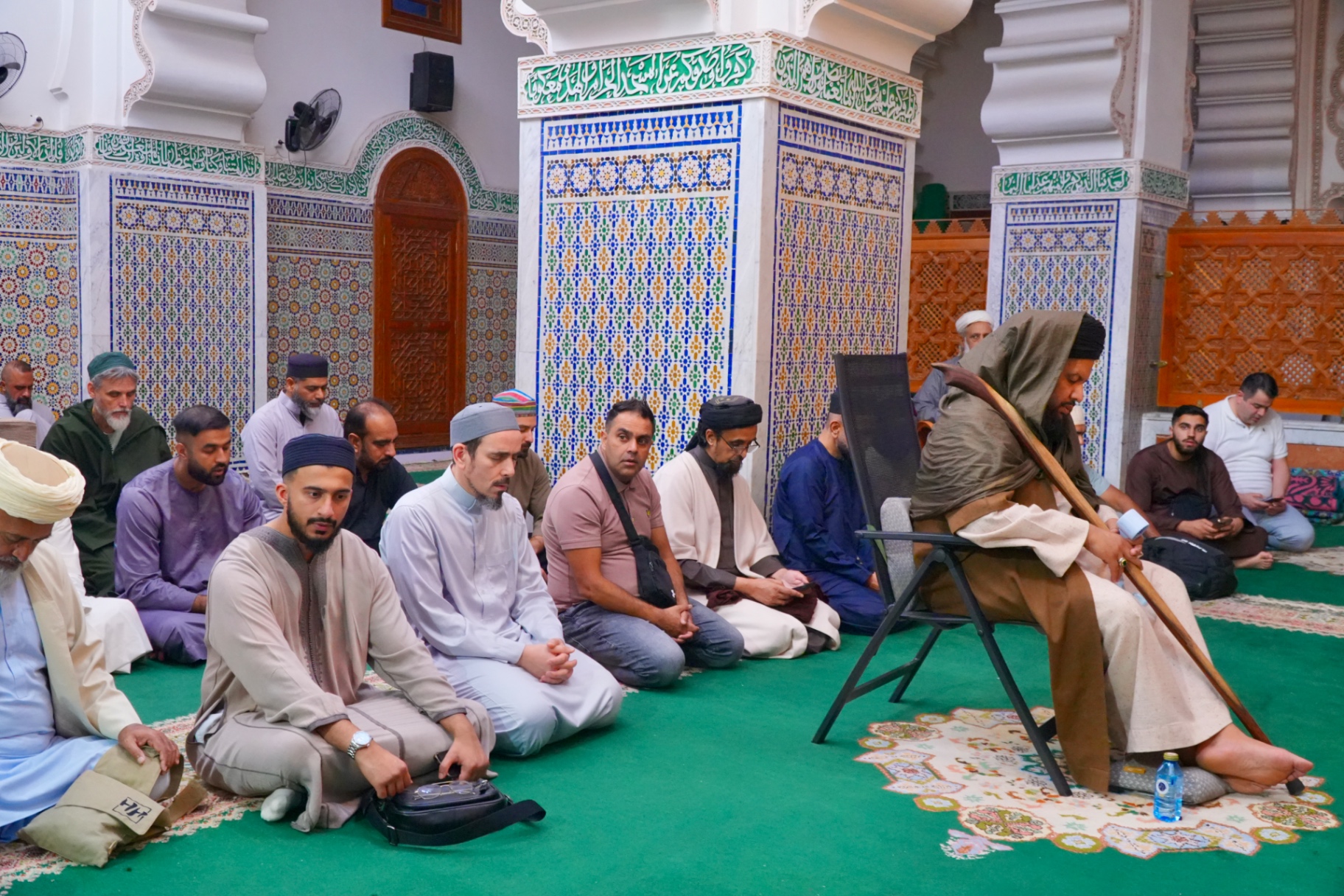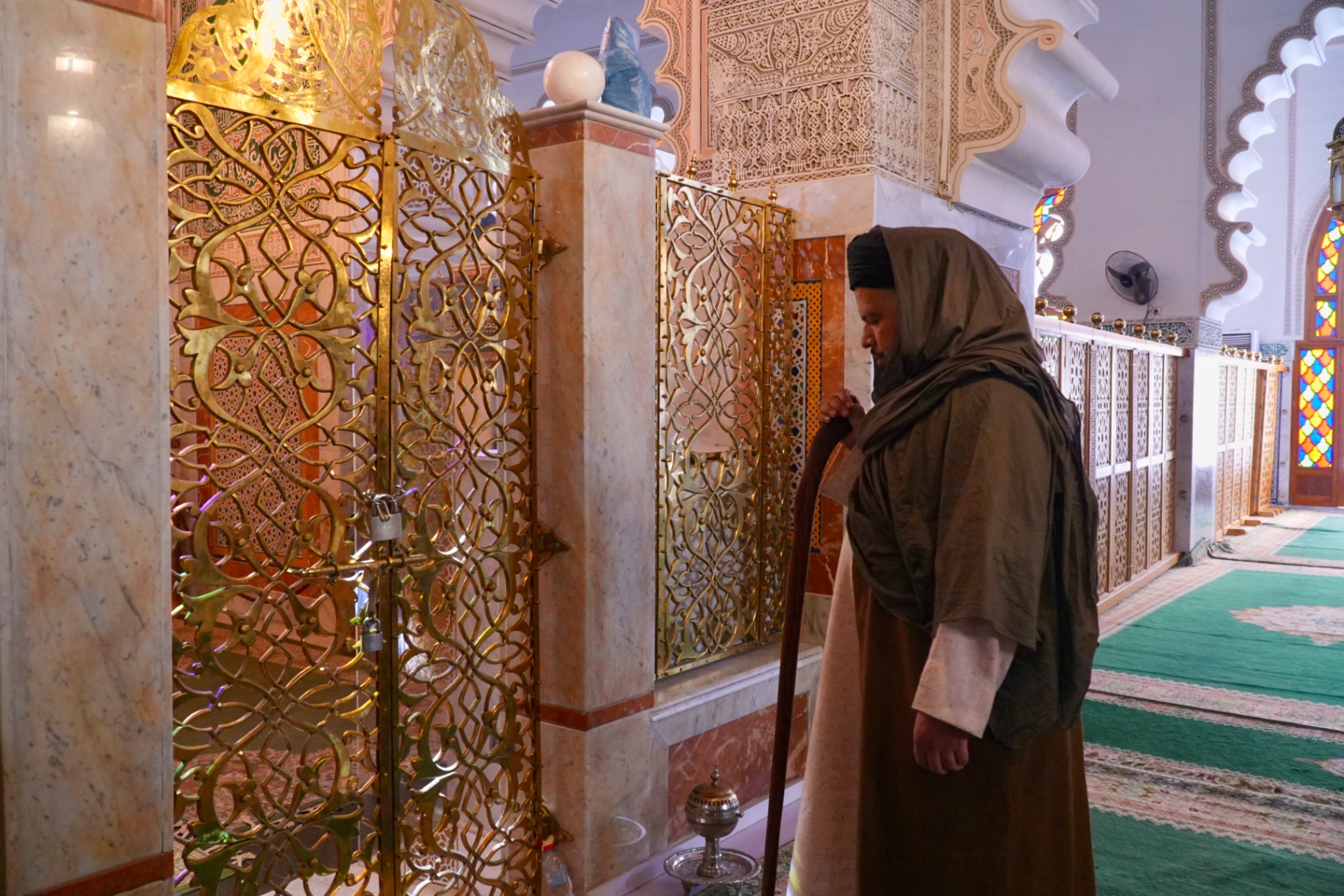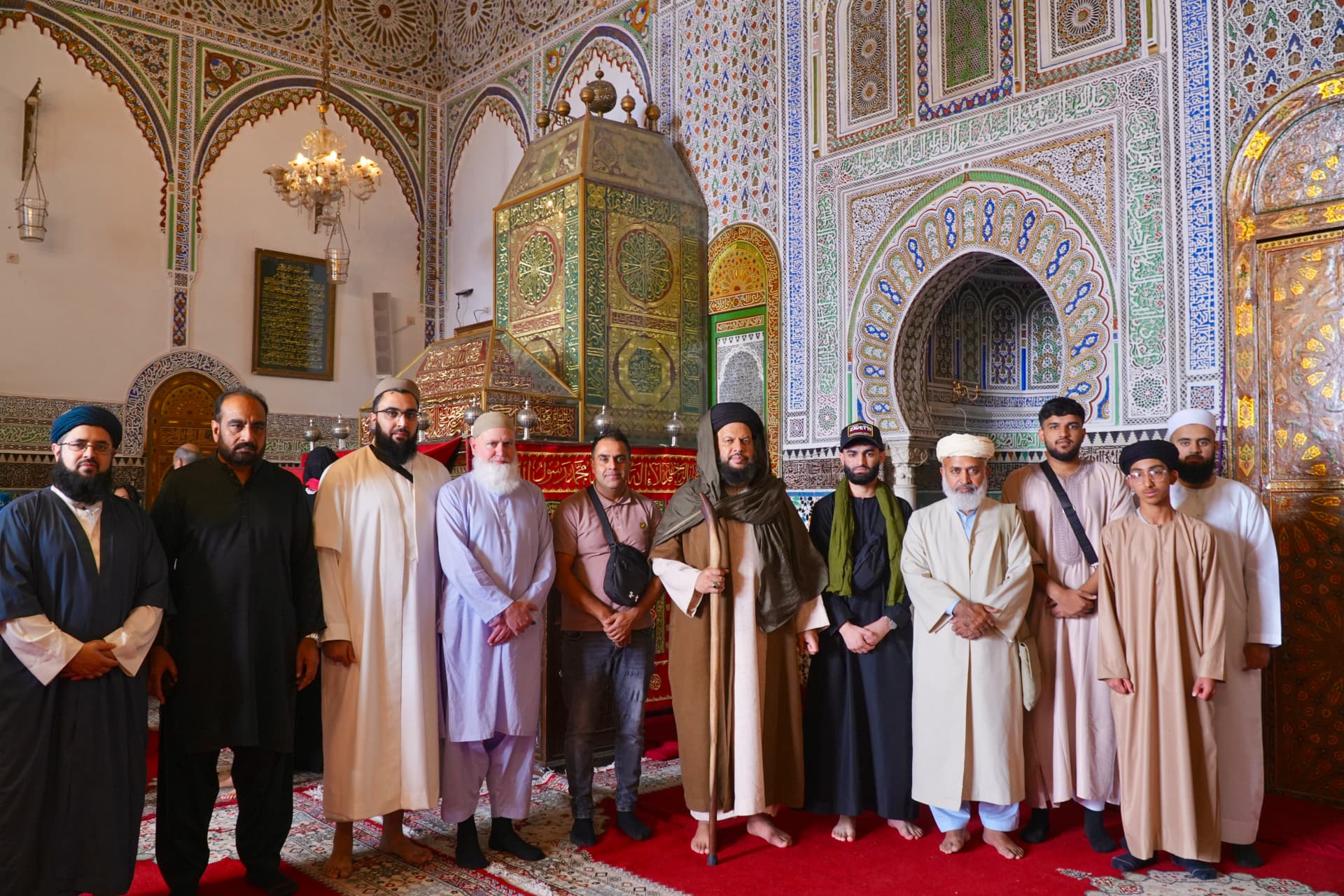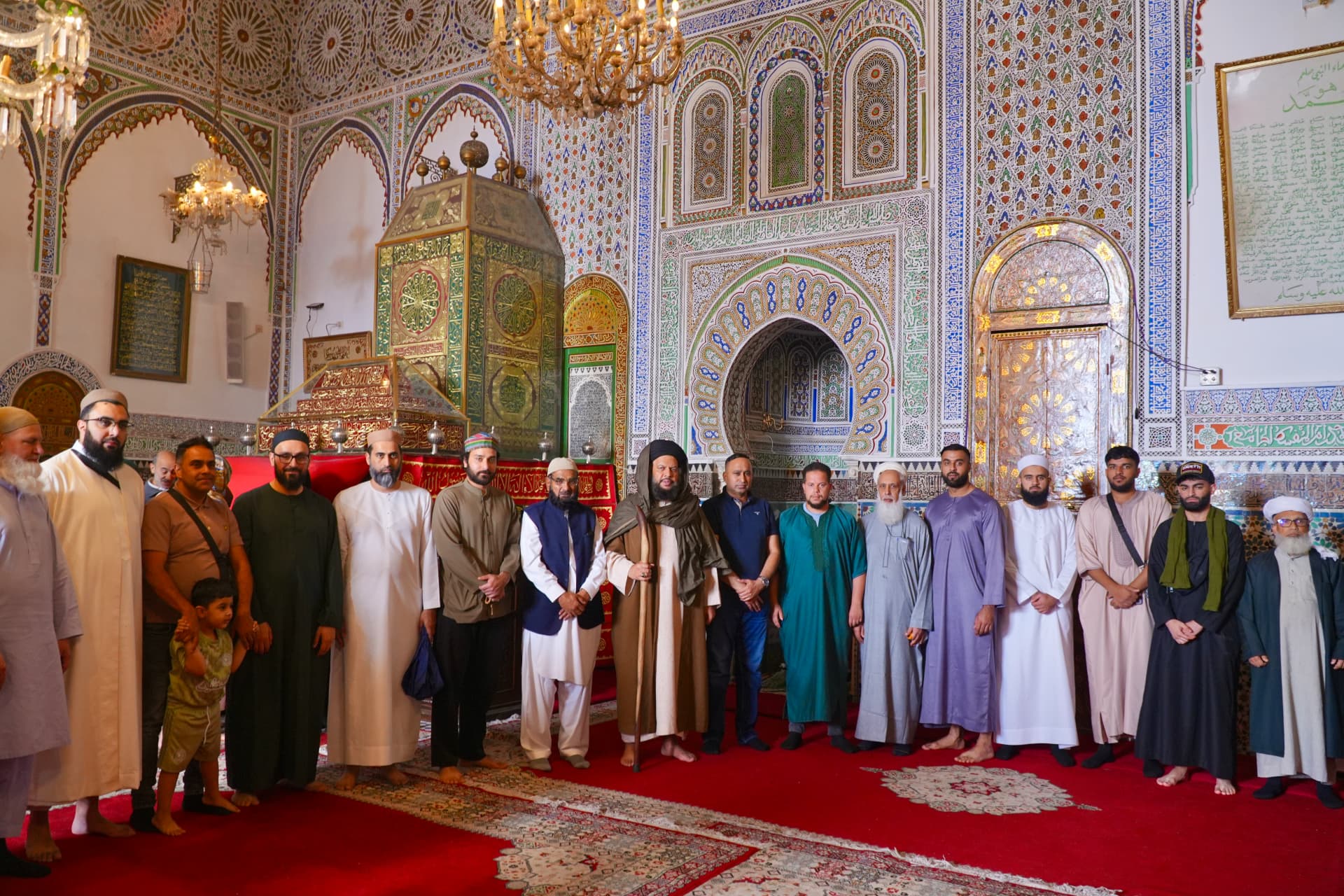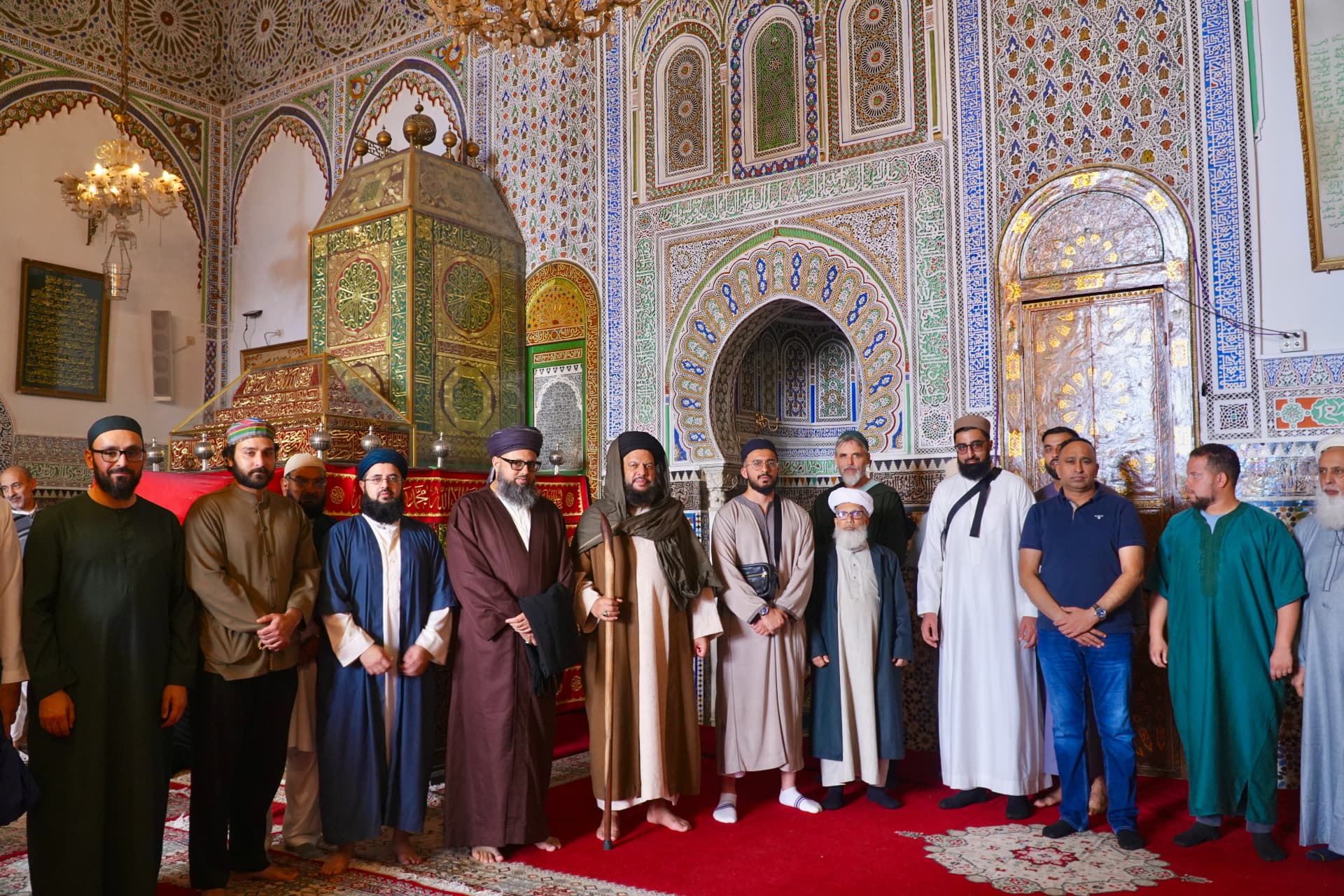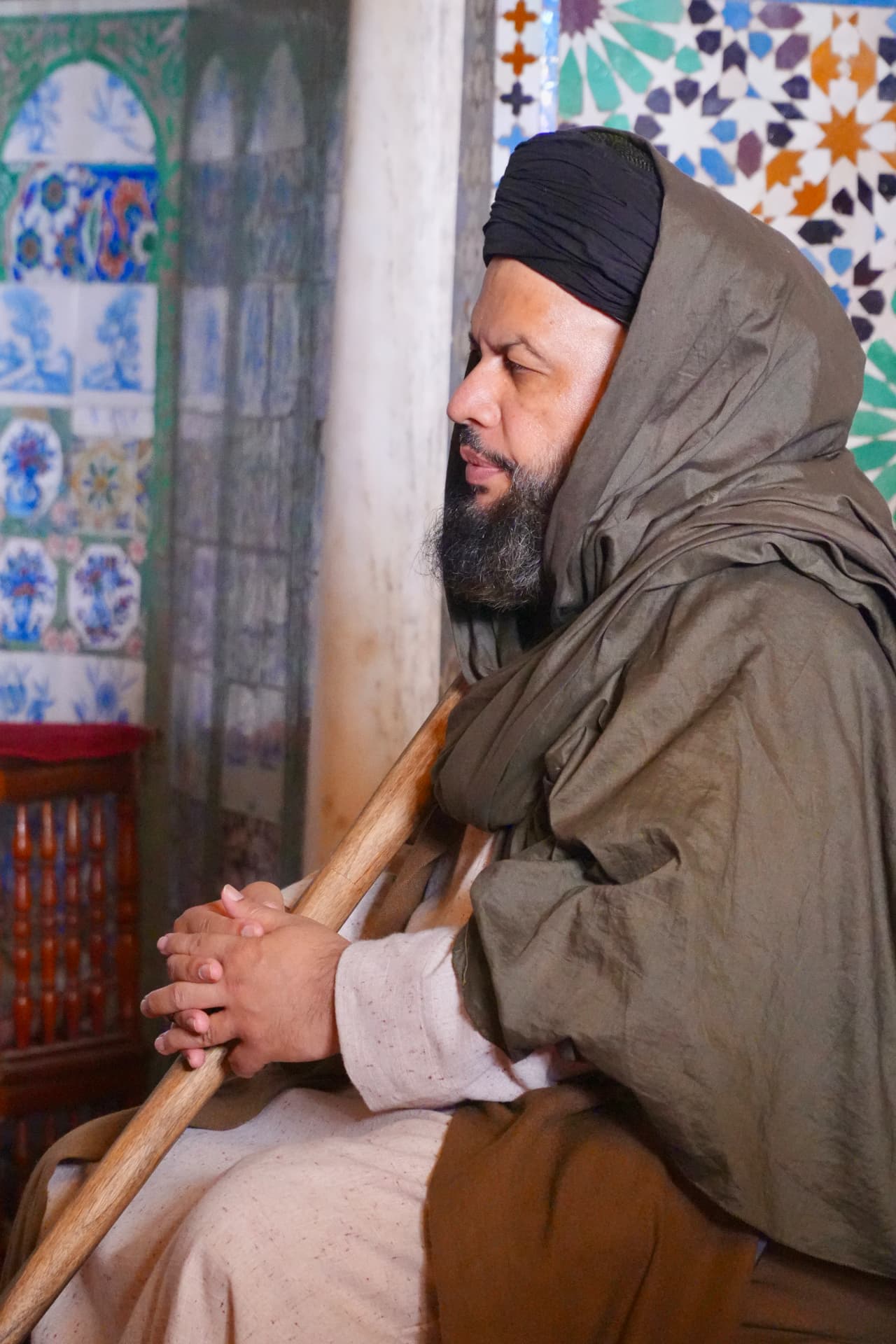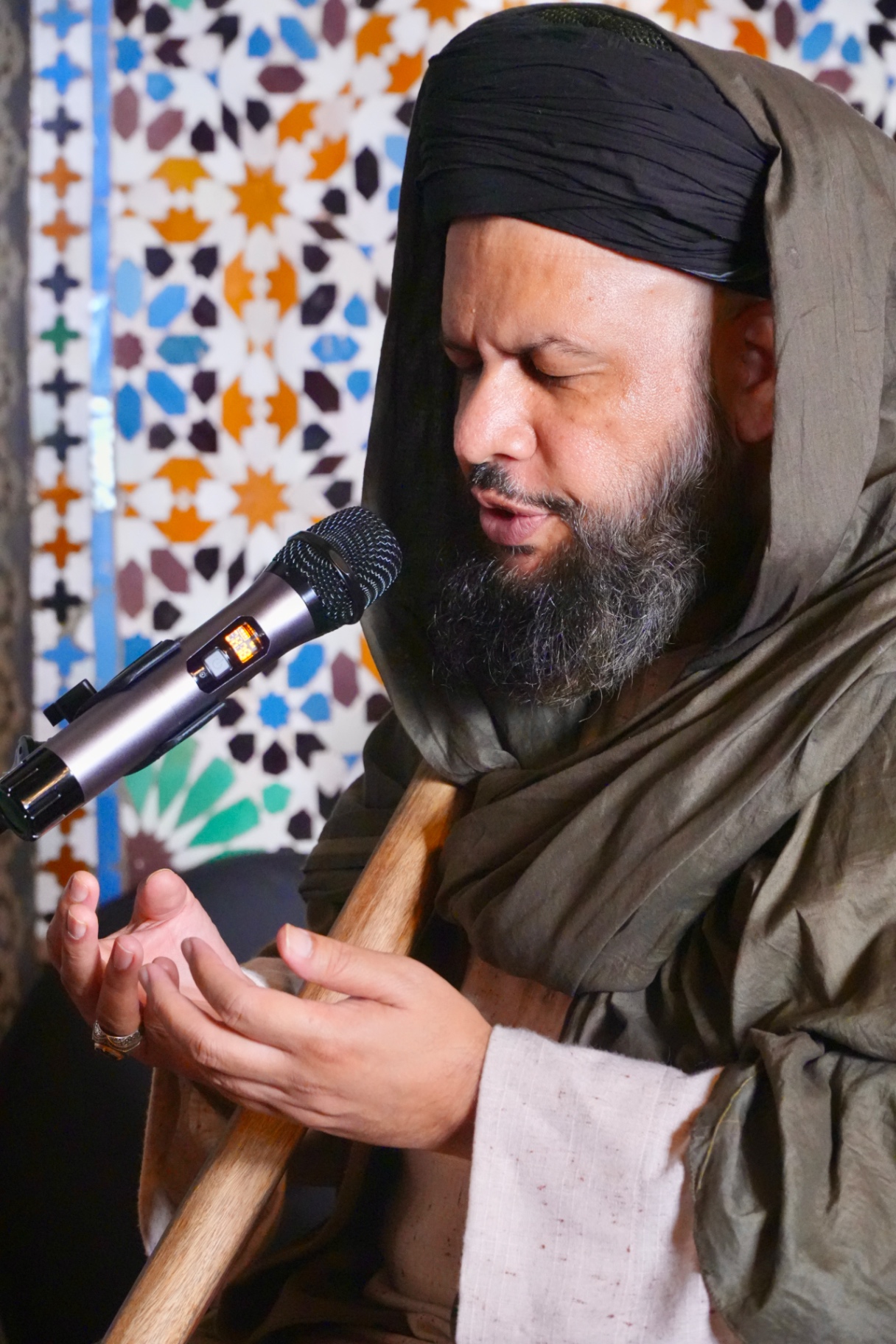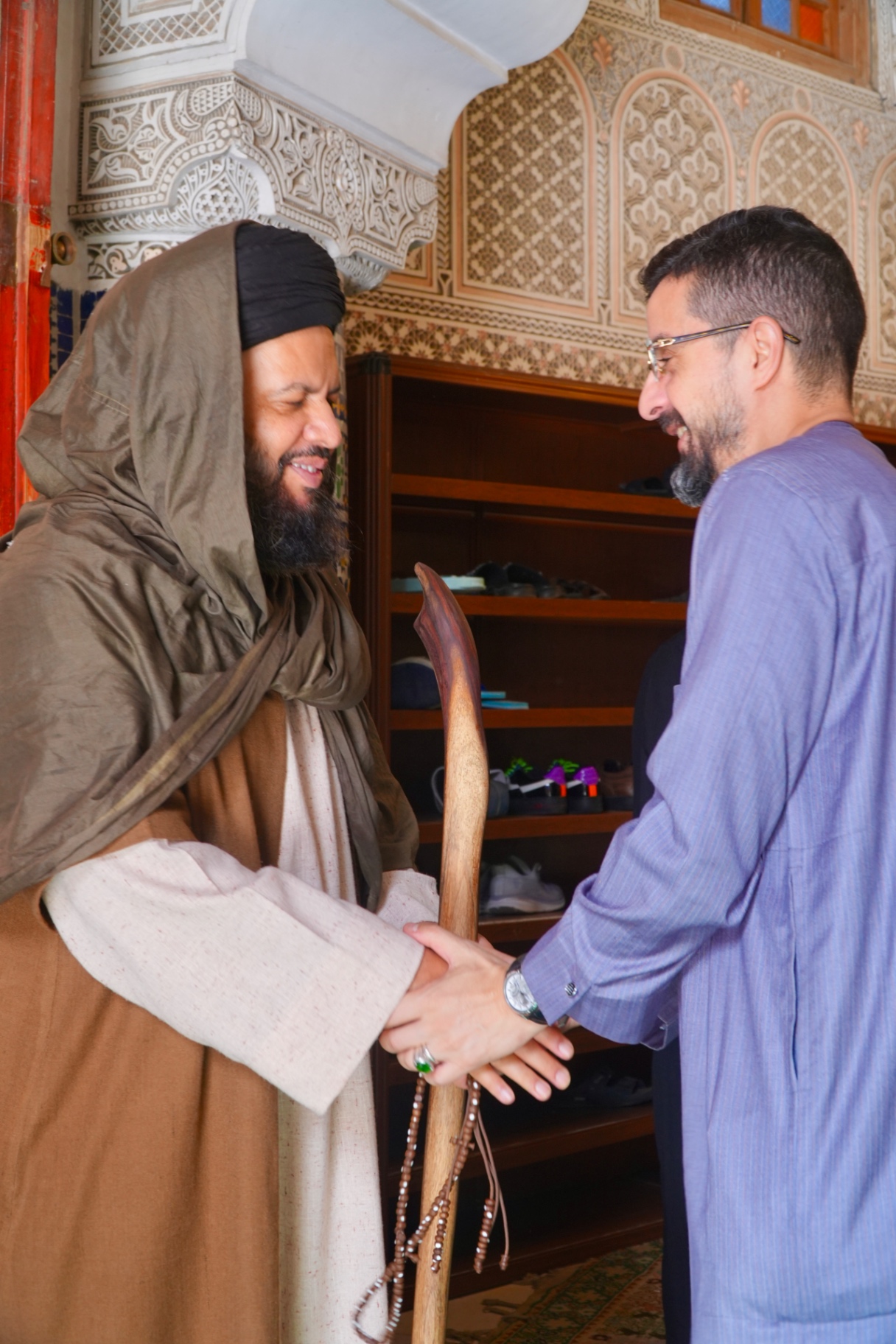
With Shaykh Ahmad Dabbagh, the companions visited Sayyiduna Moulay Idris, Sayyiduna Ahmad al-Tijani and Masjid al-Qarawiyyin. These photographs preserve moments of companionship, gathering and supplication from the day.
The stories of these places · Historical background
Sayyiduna Moulay Idris
The blessed resting place in Fez is associated with Moulay Idris II, the son and successor of Idris I. His reign is closely linked to the development of Fez: in 808, he established a settlement on the opposite bank of the river from the earlier settlement associated with his father.
His mausoleum remains an important place of remembrance in the old city. Its richly decorated surroundings reflect generations of rebuilding and expansion, rather than a structure preserved unchanged from the ninth century.
Sayyiduna Ahmad al-Tijani
Shaykh Ahmad al-Tijani was an eighteenth-century Sufi shaykh and the founder of the Tijaniyya order. He settled in Fez, where his zawiya became the home of his blessed resting place.
The zawiya has enduring importance for Tijani communities. Its history connects Fez with generations of seekers who have travelled here for remembrance and to honour the shaykh’s spiritual legacy.
Masjid al-Qarawiyyin
Known also as Masjid Qaraween, al-Qarawiyyin is one of Fez’s great places of worship and learning. Fatima al-Fihri is traditionally credited with founding the mosque in the ninth century.
Across successive centuries, the mosque was enlarged and embellished, including major work during the Almoravid period. Alongside its role in daily worship, it became a prominent centre of scholarship, giving Fez a lasting place in the history of Islamic learning.